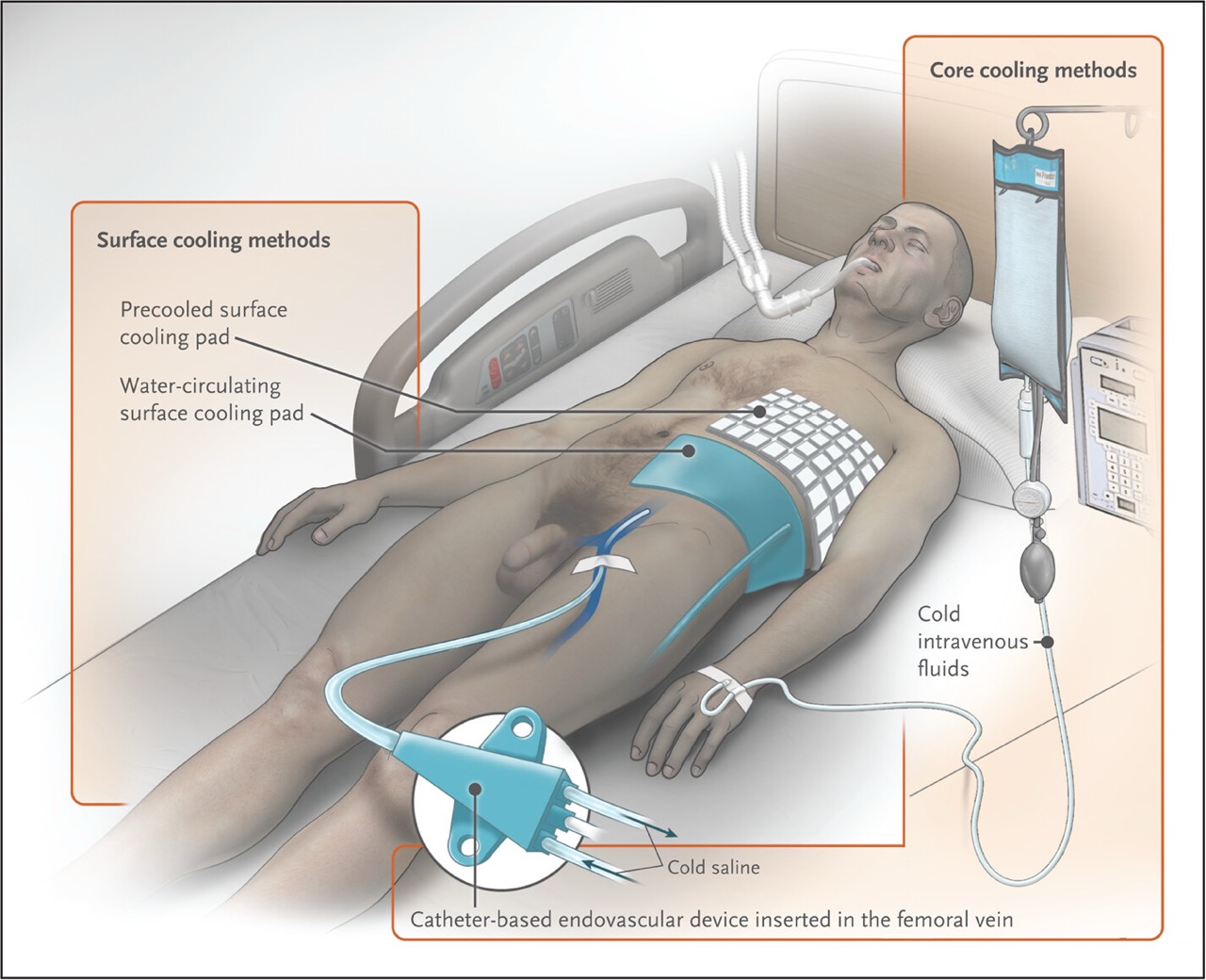


Provide precise, long-term targeted temperature management for critically ill patients requiring stable core thermal modulation.

Designed for rapid placement by trained healthcare professionals to initiate core cooling or warming immediately upon patient arrival.

Maintain patient normothermia during complex surgical procedures while simultaneously supporting gastric decompression and drainage.

Efficiently manage patient core temperature during the critical post-operative recovery phase to improve clinical outcomes.
Universal
Control Unit Compatibility

A single-use technology platform engineered to integrate seamlessly with leading thermal control units found in modern hospitals globally.
Rapid, Precise Thermal Control in 4 Steps.

01
Device Selection & Prep
Select the appropriate single-use esophageal device. Ensure compatibility with the bedside thermal control unit and prepare for rapid anatomical placement.

02
Anatomical Placement
The device is placed into the esophagus by a trained healthcare professional, similar to a standard orogastric tube, leveraging the body's own anatomy for heat exchange.

03
System Integration
Connect the device's closed-loop water circuits to the external controller. This initiates the precise cooling or warming of the patient's core temperature immediately.

04
Concurrent Management
Monitor core temperature via the control unit while simultaneously utilizing the secondary lumen for gastric decompression and drainage as needed throughout the procedure.
Engineering for Clinical Efficiency and Safety.

An innovative anatomical approach to temperature modulation.
The esophageal path represents a breakthrough method—leveraging the body's own physiology to achieve thermal control without the costs and complexities of traditional modalities.

Rapid Deployment & Ease of Use
Designed for rapid placement by trained professionals, our single-use devices ensure that clinicians can focus on patient care rather than equipment setup.

Precise Core Thermal Control.
Our technology provides clinicians with precise, efficient control over patient core temperature, even in the most demanding ICU and OR environments.

Simultaneous Gastric Management.
Unique among cooling solutions, our platform provides core temperature modulation while concurrently supporting gastric decompression and drainage.

FDA Cleared & Peer-Reviewed.
A globally recognized platform with FDA clearances and extensive coverage in leading clinical publications like ICU Management & Practice.
Recognized Authority in Acute Care.

ICU Management & Practice
"Advanced Cooling Therapy Services is at the forefront of targeted temperature management—a critical discipline in modern acute care medicine."
Medical Product Outsourcing
"The company's technology platform is designed to give clinicians precise, efficient control over patient core temperature in the most demanding clinical environments."

Reflecting its standing as a growth-oriented medical technology corporation with institutional credibility, Advance Cooling Therapy Services continues to expand its global visibility.
Mass Investor Database

FDA Regulatory Body
Clinician Trust
Designed to communicate clinical utility, the esophageal approach leverages the body's own anatomy to achieve rapid, accurate thermal control without traditional complexities.
Global Hospital Systems
Driven by clinical versatility and ease of use, adoption continues to grow across a significant number of hospitals in the United States and globally.
Clinical Utility & Regulatory Clarity.
Research, Journals, & Field Reports.
%20Large.jpeg)